Our vision is to help America's transportation fleets leverage data analytics, asset management and flexible financing to identify and act upon vehicle obsolescence.
We changed the leasing business by creating an IT infrastructure that aggregates all metrics that contribute to the cost of owning and operating a tractor.
Our lifecycle and cost management finance structure provides flexibility to allow the economic cost of each individual tractor to determine the point of its replacement.
Running equipment based on economic obsolescence and integrating new equipment technologies faster continually increase fuel efficiency and have a significant financial impact.
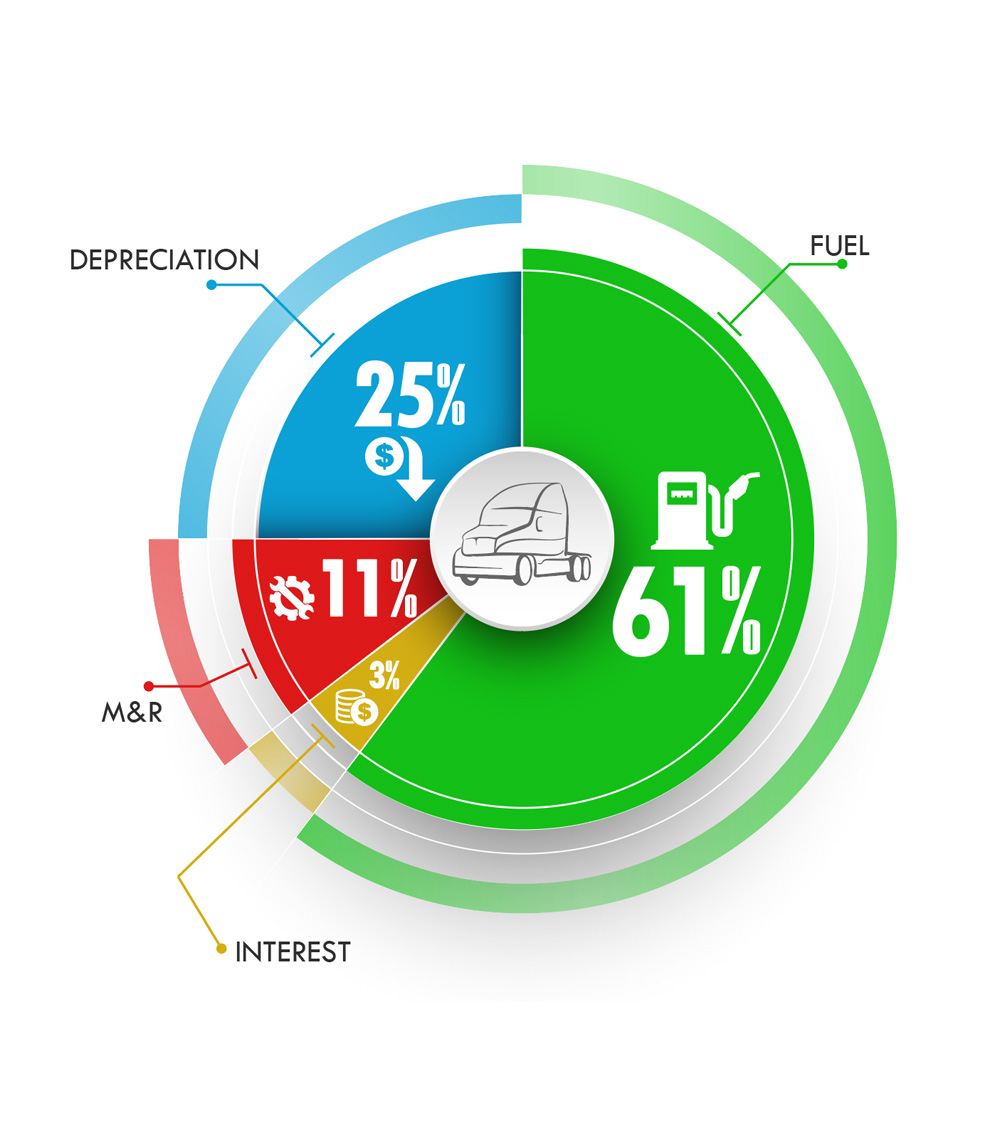

Our team of experts monitors and analyzes the main TCO components, helping fleets identify each truck's TIPPINGPOINT® - the point at which a truck reaches economic obsolescence, and costs more to operate than to replace with newer equipment.
By adopting this approach for each individual truck unit, fleets can better manage and predict replacement cycles while avoiding variable costs, which can also help manage truck orders and avoid lengthy in-servicing time frames.
Once the TIPPINGPOINT® is identified, our highly flexible financing solution allows customers to act on that real-time information to seamlessly upgrade their equipment at the optimal point in time with no penalties.
Our ability to track accurate, live data from our clients' trucks is a leading reason why so many fleets are now basing their truck procurement strategies based on our recommendations, saving them millions on their bottom line.
The days of re-procurement based on legacy methodology are long gone, and it's critical for companies to make the right acquisition strategy to remain competitive in all facets of asset management.
The EPA will move forward with their 2027 timeline, and the 2027 NOx standard is staying at 35 mg. The EPA's adjustment proposal won't be released until spring of 2026 so fleets will have less time to secure 2026 build slots once 2027 pricing is released by OEMs, which re-introduces the risk of going back to a strict allocation environment. This has made the industry snap right back into planning mode.
Once Model Year 2028 hits on January 1st, 2027, the rules change. Engines need to meet the tight 35 mg NOx limit, new warranty requirements, added emissions components, and the GHG Phase 3 updates. These changes all come with a significant cost increase. Most forecasts pertaining to Class 8 tractor costs show once the technology becomes standard there will be a significant cost increase between $8,000-$15,000 per truck.
AFFECTS OF THE EPA 2027 NOx STANDARDS ON LIFE CYCLE MANAGEMENT: The Acquisition and Disposal Decision You Make Today Will Significantly Impact Your Total Cost of Ownership.
Private fleets feel these cost shifts faster because they budget on multiyear cycles. They know exactly what $8,000-$15,000 per truck does to their bottom line.
That's why they are already: